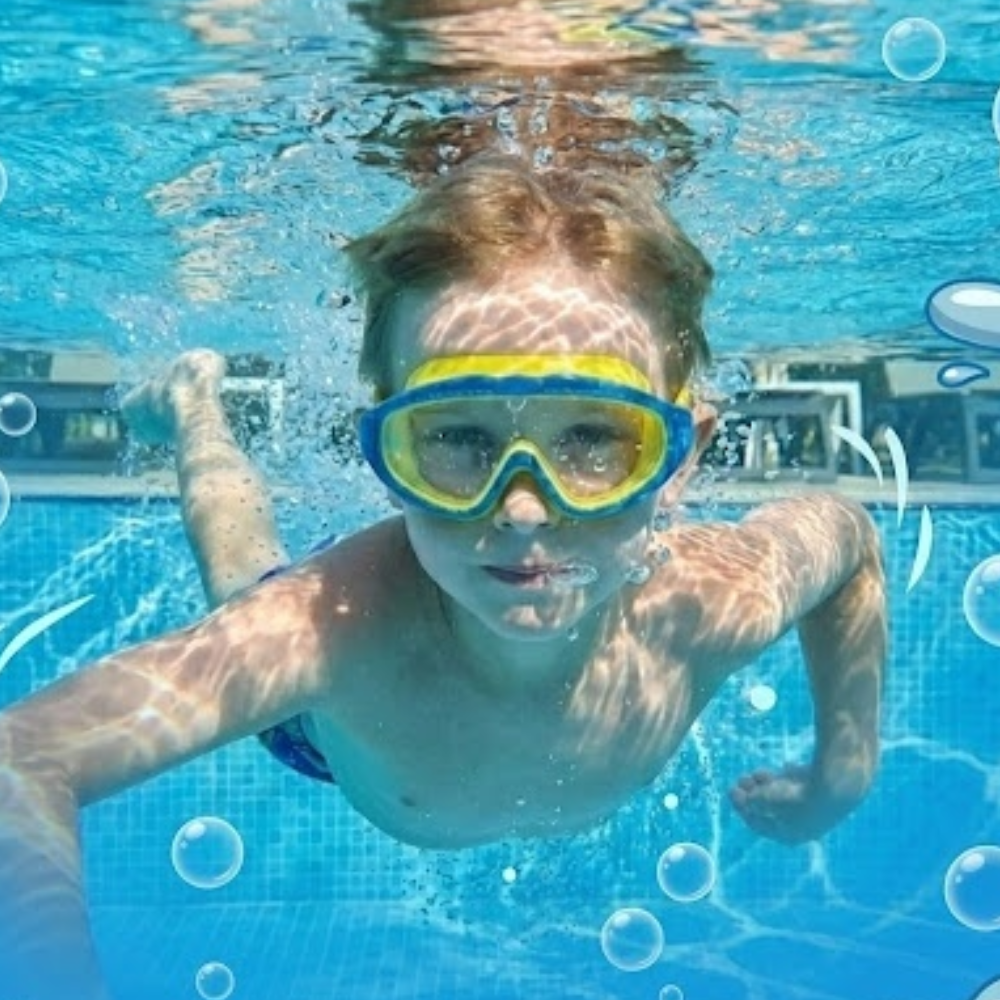
How to Stop Kids' Swimming Goggles Fogging Up: Parent's Guide

Your child puts on their swimming goggles, gets into the pool and a few minutes later you hear the familiar complaint: "I can't see. My goggles are foggy."
Fogging is one of the most common frustrations with swimming goggles, including goggles that have an anti-fog treatment.
The important thing to understand is that anti-fog does not mean completely fog-proof.
Anti-fog treatment is designed to reduce the amount of condensation that forms on the inside of the lenses. How well it continues to work can also depend on how the goggles are used, handled and cared for.
Fortunately, a few simple habits can make a big difference.
Why Do Swimming Goggles Fog Up?
Fogging happens when moisture condenses on the inside surface of the lens.
Your child's face is warm, the pool environment is humid and the goggles create a small enclosed space around the eyes.
Tiny droplets can then form on the inside of the lens.
Those droplets scatter light and create the cloudy appearance we describe as fogging.
This can happen with almost any pair of swimming goggles.
Anti-fog treatment helps reduce the problem, but it cannot guarantee that condensation will never appear.
Anti-Fog Does Not Mean Fog-Proof
This is probably the most important thing for parents to understand.
When goggles are described as having anti-fog lenses, it does not mean the lenses will remain perfectly clear forever in every swimming environment.
The coating is there to help reduce condensation.
Its effectiveness can be affected by:
- How frequently the goggles are used.
- How the goggles are cleaned.
- Whether the inside of the lenses is touched.
- How the goggles are stored.
- Normal wear over time.
- Pool and environmental conditions.
JIMJOOS traditional and wide-lens children's swimming goggles both use anti-fog lenses, but they should still be cared for correctly to help protect that treatment.
Tip 1 — Do Not Rub the Inside of the Lenses
This is one of the easiest mistakes to make.
Your child takes their goggles off and sees some water or a mark on the inside.
The natural reaction is to wipe the lens with a finger, towel or clothing.
Try to avoid this.
The anti-fog treatment is on the inside surface of the lens, and repeated rubbing or scrubbing can affect it.
Instead, rinse the goggles gently with clean fresh water after swimming and allow them to dry naturally.
The less unnecessary contact with the inside surface, the better.
Tip 2 — Keep Fingers Away From the Inside
Children naturally want to touch everything.
When they take their goggles off, they may put their fingers directly inside the lenses.
Encourage them to hold the goggles by the frame or strap instead.
This is a simple habit that can help protect the inside surface.
If your child is old enough to manage their own swimming kit, explain that the inside of their goggles is the part they should avoid touching.
Tip 3 — Rinse Gently After Swimming
Pool water contains chlorine and other substances that you do not want sitting on swimming goggles for days between lessons.
After swimming, gently rinse the goggles with fresh water.
There is no need to scrub them.
Simply rinsing away pool water and allowing the goggles to dry naturally is a good routine.
Do not aggressively shake, wipe or polish the inside of the lenses afterwards.
Tip 4 — Let Goggles Dry Before Storing Them
Putting wet goggles straight into a closed case or leaving them buried inside a damp swimming bag until the following week is not ideal.
After rinsing them, allow the goggles to air dry naturally.
Once dry, store them somewhere the lenses will not become scratched or damaged.
The JIMJOOS goggles come with a protective case, which is useful for storage once the goggles are dry.
A case also helps prevent the lenses being scratched by harder objects inside a swimming bag.
Tip 5 — Avoid Leaving Goggles in Excessive Heat
Swimming goggles should not be left somewhere extremely hot for long periods.
For example, avoid leaving them sitting in strong direct sunlight or inside a very hot car.
Heat can affect materials and coatings over time.
Once the goggles are dry, store them somewhere cool and protected until the next lesson.
Tip 6 — Make Sure Fogging Is Actually the Problem
Fogging and leaking can sometimes be confused, particularly by younger children.
Ask your child what they can see.
Fogging usually looks like a cloudy or misty layer forming on the inside of the lenses.
Leaking means actual pool water is entering the goggles.
They are different problems and require different solutions.
If there is water sitting inside the lenses, check the fit and silicone seal rather than treating it as a fogging problem.
Fogging vs Leaking
If the lenses look misty but there is no pool water collecting inside, you are probably dealing with fogging.
If actual water is entering around the edges, check:
- The goggles are sitting evenly.
- No hair is trapped underneath the silicone seal.
- The nose bridge is adjusted correctly.
- The strap is secure without being excessively tight.
- The goggle style suits your child's face shape.
Simply tightening the strap more and more is not always the answer to leaking goggles.
Tip 7 — Fit the Goggles Before the Lesson
Constantly removing and adjusting goggles during swimming can lead to more touching of the lenses.
Try to get the fit right before your child enters the pool.
Adjust the nose bridge and strap at home if possible.
Then, before the lesson, check that the goggles:
- Sit comfortably around the eyes.
- Stay securely in position.
- Are not painfully tight.
- Have no hair trapped underneath the seal.
- Feel comfortable to your child.
Once the fit is right, there should be less need for your child to remove and handle the goggles throughout the lesson.
Tip 8 — Teach Children How to Handle Their Goggles
Older children can take responsibility for looking after their own swimming equipment.
A simple routine is enough:
- Hold goggles by the frame or strap.
- Avoid touching the inside of the lenses.
- Rinse them after swimming.
- Allow them to dry.
- Put them back into their protective case once dry.
These habits take only a few seconds but can help keep the goggles in better condition.
What Should You NOT Put Inside Swimming Goggles?
There are many home remedies online for stopping goggles from fogging.
Parents should be cautious about applying household products to children's swimming goggles.
Avoid experimenting with products such as toothpaste, washing-up liquid, shampoo or other household cleaners.
These products were not necessarily designed for swimming-goggle lenses and could affect the lens surface or coating.
For children's goggles, simple correct care is the best place to start.
What About Anti-Fog Spray?
There are anti-fog products specifically made for swimming goggles.
If you decide to use one, make sure it is specifically intended for swimming goggles and compatible with the type of lens or coating on your goggles.
Always follow the instructions supplied with that product.
Do not assume that any general anti-fog cleaner is suitable for children's swimming goggles.
Why Do New Goggles Sometimes Fog?
A parent may understandably be disappointed if relatively new anti-fog goggles develop some misting.
However, anti-fog treatment reduces condensation rather than creating a permanent guarantee against it.
Pool temperature, humidity, how the goggles have been handled and how much the inside surface has been touched can all affect what your child experiences.
If the goggles are otherwise fitting correctly, start by checking the care routine.
Make sure nobody is wiping or rubbing the inside of the lenses between swims.
Why Do Older Goggles Start Fogging More?
With regular swimming, goggles are repeatedly exposed to pool water, handling, drying and storage.
The anti-fog performance of a lens may gradually become less effective with normal use.
There is no exact lifespan that applies to every pair because children swim at different frequencies and goggles are cared for differently.
A child swimming several times a week will put much more use through their goggles than a child attending one lesson each week.
This is why good care from the beginning matters.
Does Tightening the Goggles Stop Fogging?
No.
Strap tightness mainly affects how securely the goggles sit against the face.
Making the strap excessively tight will not solve condensation forming on the inside of the lenses.
If the goggles are fogging but not leaking, do not keep tightening them.
They should fit securely and comfortably.
Painfully tight goggles can make swimming unpleasant without addressing the actual fogging problem.
Can Opening the Goggles Clear the Fog?
Children often pull their goggles away from their face briefly to clear mist.
This may provide temporary relief, but it also interrupts the lesson and can introduce more water or moisture inside.
If your child is repeatedly doing this every few minutes, check how the goggles are being cared for and whether the inside surface has been rubbed or touched frequently.
It may also be worth checking whether the goggles are simply becoming worn from regular use.
Traditional vs Wide-Lens Goggles
JIMJOOS offers two different styles of children's swimming goggles.
Traditional goggles are designed for children aged 3–10.
Wide-lens swimming goggles are designed for ages 6–14 and provide a larger viewing area.
Both styles use anti-fog lenses.
Children aged 6–10 fall within the recommended age range for both styles, so the choice can depend on fit and personal preference.
Whichever style your child uses, the same basic anti-fog care principles apply.
A Simple After-Swimming Routine
When your child finishes swimming:
- Rinse the goggles gently with fresh water.
- Avoid touching or wiping the inside of the lenses.
- Allow the goggles to air dry naturally.
- Once dry, place them in their protective case.
- Store them away from excessive heat until the next lesson.
This routine is simple enough for older children to learn themselves.
What If the Goggles Still Keep Fogging?
If you are already following the correct care routine and the goggles continue to fog heavily, consider how long and how frequently they have been used.
Check that the inside of the lenses has not been repeatedly rubbed or cleaned.
You can also consider a swimming-goggle-specific anti-fog product if it is compatible with your lenses and used according to its instructions.
Eventually, normal wear can mean that replacing a well-used pair becomes the practical option.
Clearer Goggles Start With Better Habits
There is no magic trick that guarantees children's swimming goggles will never fog.
Anti-fog lenses are designed to reduce the problem, but correct care still matters.
The three most useful habits are simple:
- Do not rub the inside of the lenses.
- Rinse gently with fresh water after swimming.
- Allow the goggles to dry before storing them safely.
Teaching children those habits from their first pair of goggles can help them look after their swimming kit properly.
And when they can see clearly, they can spend less time adjusting their goggles and more time concentrating on enjoying their swimming lesson.
Get the gear mentioned in this article
All JIMJOOS products are available on Amazon with Prime delivery.
Shop on Amazon