
Fabric vs Silicone Swimming Caps for Kids: Which Is Better?
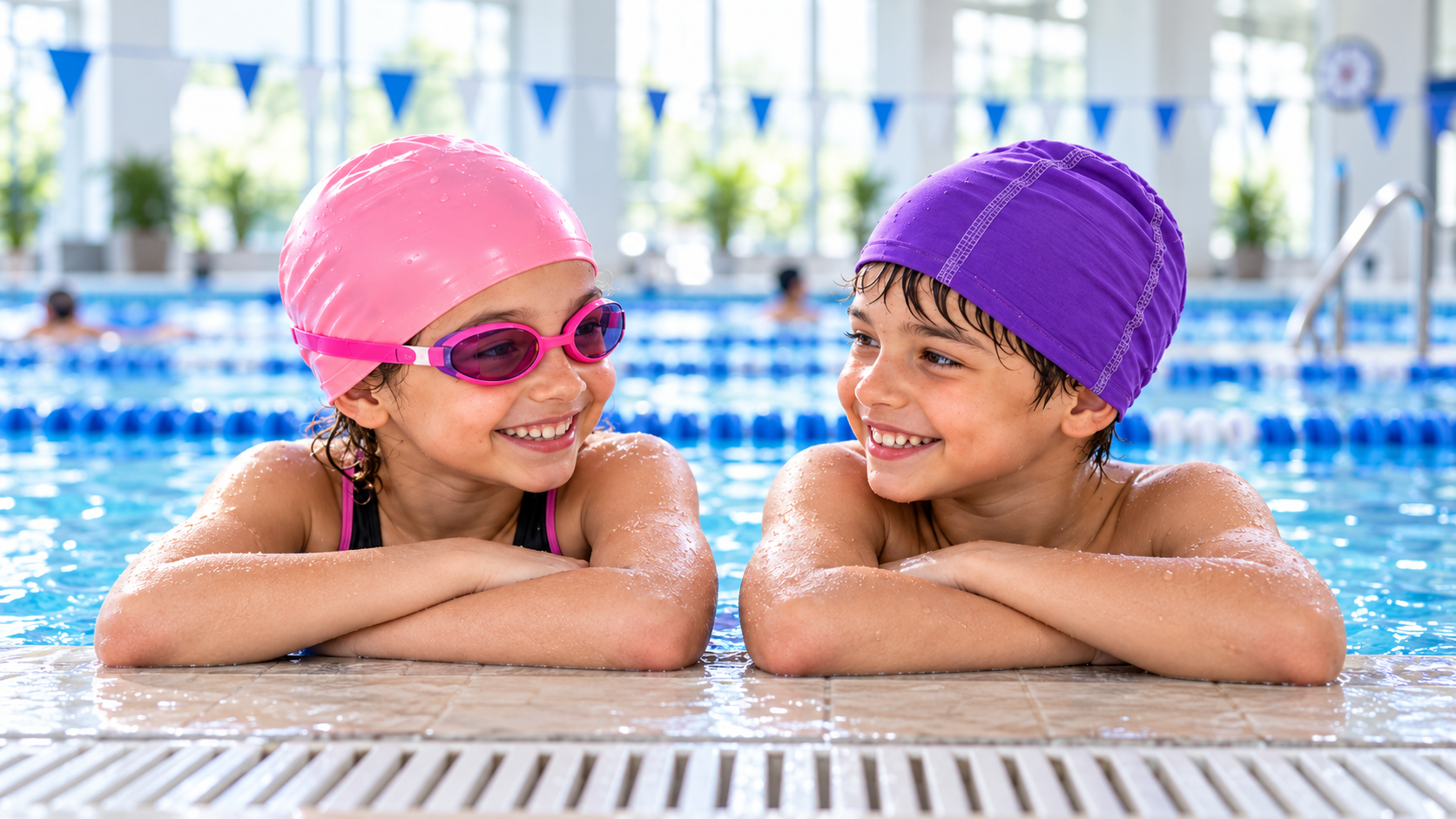
Choosing a swimming cap for your child sounds simple until you discover there are several different materials and styles available.
Two of the most common choices are silicone and fabric.
Both can keep hair more controlled during swimming lessons, but they feel very different to wear and suit different children.
Silicone caps provide the smooth, close-fitting style most people associate with swimming. Fabric caps are softer, stretchier and feel more like lightweight sportswear.
So which one should you choose?
The answer depends on what matters most to your child: a close fit, softness, ease of putting the cap on, hair type and how they feel about wearing something snug around their head.
Here's how fabric and silicone swimming caps compare.
What is a silicone swimming cap?
Silicone is one of the most popular materials used for swimming caps.
A silicone cap stretches over the head and sits closely against the hair.
JIMJOOS silicone swimming caps are made from 100% silicone and are available in two children's sizes for ages 3–8 and 9–14.
They are designed to provide a secure, smooth fit and have an anti-slip inner texture.
Silicone caps are particularly popular for regular swimming lessons because they stay close to the head without loose fabric moving through the water.
What is a fabric swimming cap?
A fabric swimming cap is made from stretchy textile material rather than silicone.
JIMJOOS fabric swimming caps are made from 85% polyester and 15% elastane.
They are available in Small for ages 3–8 and Large for ages 9–14.
The biggest difference is how they feel.
Fabric caps are soft, flexible and breathable. They stretch around the head more like clothing and can feel less restrictive for children who dislike the snug sensation of traditional silicone caps.
They are also lightweight and quick drying.
Which swimming cap is more comfortable?
Comfort is very personal.
Some children like the secure feeling of silicone and hardly notice the cap once they begin swimming.
Others are much more sensitive to tight clothing, hats or anything pressing around their head.
For those children, fabric can feel noticeably softer.
A fabric cap does not grip the head in the same way as silicone, which can make it appealing to children who have previously resisted wearing a swimming cap.
However, some swimmers prefer the closer fit of silicone because it feels more secure while moving through the water.
Neither is automatically more comfortable for every child.
Which cap is easier to put on?
Fabric caps are often easier for children to handle themselves.
Because the material is soft and stretchy, it can usually be pulled over the head without the same level of stretching required with silicone.
This can be helpful for younger swimmers who are learning to get themselves ready for lessons.
Silicone caps take a little more technique.
They need to be stretched carefully over the head and positioned so the hair sits comfortably underneath.
Once children become familiar with the process, silicone caps are straightforward to use, but some younger swimmers may initially need help from an adult.
Which is better for long hair?
Both materials can help keep longer hair contained.
The best choice depends on the amount of hair, the child's comfort and how securely they want the cap to fit.
Silicone provides a closer fit and can hold the hair firmly against the head.
Fabric offers more flexibility and may feel more forgiving when fitting over thicker or longer hair.
Whichever material you choose, arrange long hair into a low, flat shape before putting on the cap.
Avoid large hair clips, bulky buns or sharp accessories underneath the cap.
Do silicone caps keep hair dry?
Not completely.
This is one of the most common misconceptions about swimming caps.
A silicone cap sits closely against the head and may reduce how freely water moves through the hair, but it does not create a completely watertight seal.
Water can still enter around the hairline, ears and edges of the cap.
Silicone should therefore be chosen for fit, hair control and swimming comfort rather than because you expect completely dry hair afterwards.
Do fabric swimming caps keep hair dry?
No.
Fabric caps allow water through much more readily than silicone caps.
Their main purpose is comfort and keeping hair controlled rather than trying to reduce water contact.
A child's hair should be expected to get wet while wearing a fabric swimming cap.
This makes fabric particularly suitable for parents who prioritise softness, stretch and ease of wear rather than trying to minimise the amount of water reaching the hair.
Which cap stays in place better?
A correctly sized silicone cap usually gives a closer and more secure fit.
Its smooth material stretches firmly around the head.
Fabric caps also stay in place when sized correctly, but they naturally have a softer and less compressed feel.
Correct sizing matters with both materials.
A cap that is too large may move or wrinkle during swimming, while one that is too small may feel uncomfortable.
JIMJOOS offers both silicone and fabric children's caps in age-based sizes to make choosing the right starting size simpler.
Which swimming cap is better for beginners?
There is no single best material for beginners.
A confident child who is happy wearing a snug cap may get on perfectly well with silicone from their first lessons.
A child who is nervous about swimming equipment or dislikes tight-fitting hats may find fabric easier to accept.
For beginners, the most important goal is usually making swimming feel comfortable and enjoyable.
If one type of cap regularly causes arguments before lessons, trying the other material may be worthwhile.
Which cap is better for swimming lessons?
Both silicone and fabric caps can work well for swimming lessons.
Silicone is a traditional choice because of its close fit and streamlined shape.
Fabric can be a good alternative for children who value softness and ease of putting the cap on.
Before choosing, also check whether your swimming school has any particular rules about swimming caps.
Some pools simply ask children with longer hair to keep it securely controlled, while others may have their own requirements.
Which cap is better for children who dislike tight caps?
Fabric is worth considering.
The stretchy textile construction gives it a noticeably different feel from silicone.
Rather than gripping closely against the head, fabric has a softer fit that some children find easier to tolerate.
This does not mean every child who dislikes silicone will automatically love fabric, but it provides parents with another option rather than simply giving up on swimming caps altogether.
Allow your child to try the cap at home before their next lesson so the first experience is not in a busy changing room.
Which cap is better for children who swim frequently?
Either can be suitable for regular swimming.
Silicone is durable and commonly used for frequent lessons and training.
Fabric caps are also designed for repeated use and are quick drying.
The better choice comes down to what your child will actually wear comfortably and consistently.
A technically suitable cap is not very useful if your child removes it five minutes into every lesson.
What about chlorine?
Neither silicone nor fabric swimming caps completely isolate the hair from pool water.
Silicone may reduce some direct water contact because it fits closely around the head.
Fabric allows considerably more water through.
Neither should be treated as a method of completely protecting hair from chlorine.
After swimming, normal hair care such as rinsing the hair with fresh water can be useful, particularly for children who swim regularly.
Are fabric swimming caps only for younger children?
No.
Soft fabric caps can be useful for children across a range of ages.
JIMJOOS fabric swimming caps are designed for children aged 3–14, with two sizes covering younger and older swimmers.
Older children may prefer fabric for exactly the same reasons as younger children: softness, stretch and comfort.
The deciding factor should be fit and preference rather than assuming fabric is only for beginners.
Are silicone caps only for serious swimmers?
No.
Although silicone caps are widely used by competitive swimmers, they are also completely normal for ordinary children's swimming lessons.
Children do not need to be training competitively to benefit from a secure swimming cap.
Silicone works just as well for weekly lessons, school swimming and recreational pool visits.
What are the main advantages of silicone swimming caps?
Silicone may suit your child if you want:
- A close and secure fit
- A smooth swimming-cap feel
- A cap that keeps loose hair firmly contained
- A durable material for regular swimming
- Less water movement through the hair than with fabric
JIMJOOS silicone children's caps are available in 12 colours and two age-based sizes.
What are the main advantages of fabric swimming caps?
Fabric may suit your child if you want:
- A softer feel around the head
- Stretchy, flexible material
- A lightweight cap
- Breathable fabric
- Quick drying material
- Easier fitting and removal for some children
- An alternative for children who dislike the feeling of silicone
JIMJOOS fabric children's swimming caps are available in 10 colours and two sizes covering ages 3–14.
Can my child switch between fabric and silicone?
Absolutely.
There is no reason a child has to use the same type of cap for every swimming activity.
Some families may prefer a silicone cap for one type of swimming and a fabric cap for another.
Others may simply keep both and let the child choose.
Once you know which material your child prefers, choosing becomes much easier.
Fabric vs silicone swimming caps: which should I choose?
Think about your child's priorities.
Choose silicone if they prefer a close, secure fit and want the traditional swimming-cap feel.
Consider fabric if softness, stretch and easy fitting are more important.
If your child currently refuses to wear a silicone cap because they dislike how tight it feels, trying fabric is particularly worthwhile.
If they already happily wear silicone and it fits properly, there may be no reason to change.
The bottom line
Fabric and silicone swimming caps can both be excellent choices for children.
They simply solve slightly different problems.
Silicone provides a smooth, secure and close-fitting swimming cap that works well for regular lessons.
Fabric provides a softer, stretchy and lightweight alternative that can be particularly appealing to children who dislike the feel of silicone.
Neither option will keep hair completely dry, and neither material is automatically better for every swimmer.
The best swimming cap is the one that fits correctly, keeps your child's hair manageable and feels comfortable enough that they are happy to wear it.
If softness and easy fitting are the priority, a fabric swimming cap is well worth trying.
Get the gear mentioned in this article
All JIMJOOS products are available on Amazon with Prime delivery.

