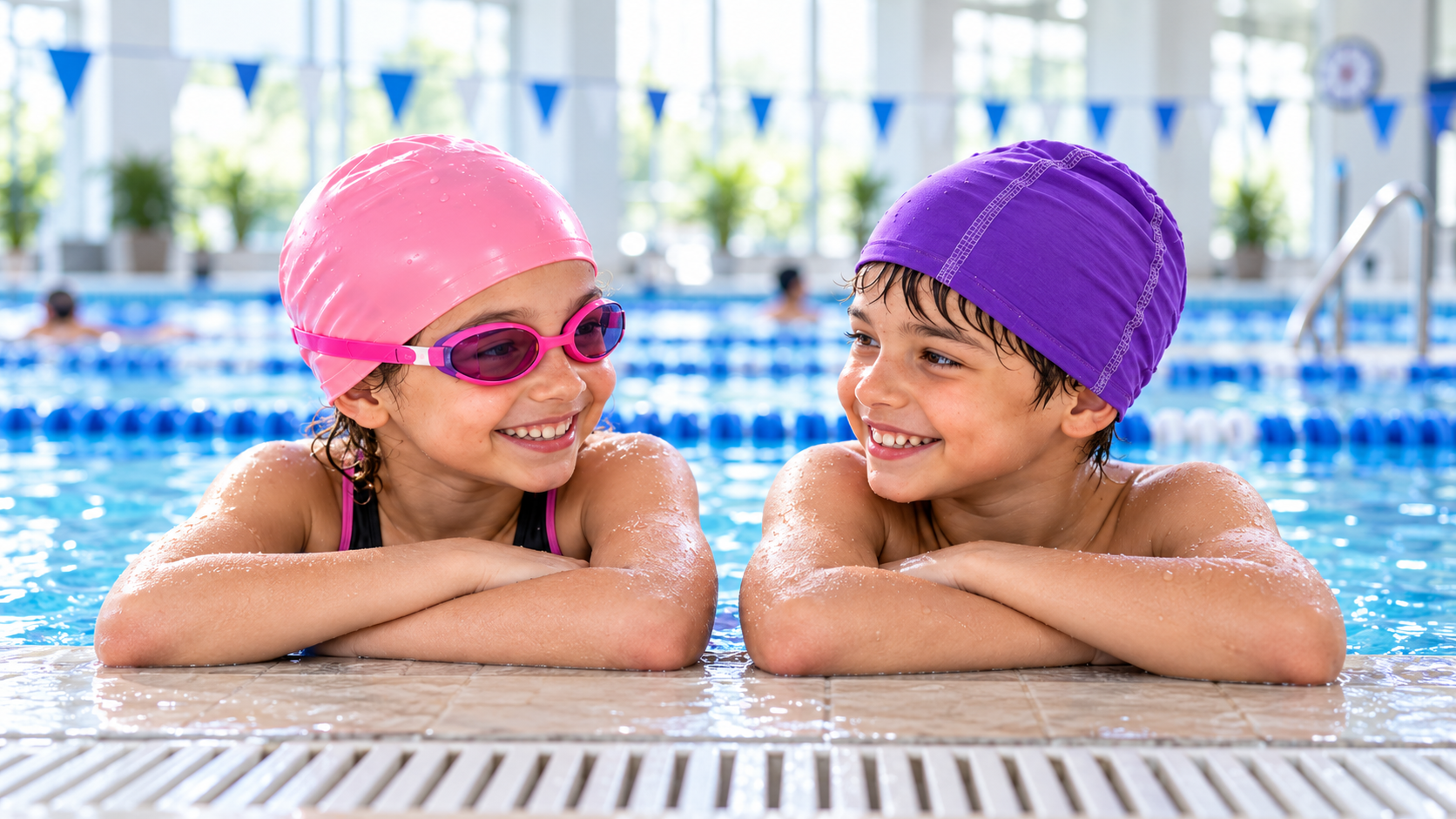
Should Kids Wear a Swimming Cap for Lessons? A Parent's Guide

If your child has recently started swimming lessons, you may be wondering whether a swimming cap is really necessary. Some children seem to wear one every week, while others jump straight into the pool without one.
The simple answer is that a swimming cap is not always compulsory, but for many children it can make swimming lessons more comfortable and practical. Pool rules vary, so it is always worth checking what your child's swimming school or leisure centre expects.
Here's what parents should know before deciding.
Do kids need to wear a swimming cap for lessons?
Not every swimming pool requires children to wear a cap, particularly during beginner lessons. However, many swimming schools encourage them because they help keep longer hair controlled and away from the child's face while swimming.
A cap can be particularly useful once children begin spending more time swimming independently, practising different strokes or taking part in more structured lessons.
For children with short hair, a cap may feel less essential, but some still prefer wearing one as part of their regular swimming kit.
The most important thing is that the cap fits comfortably and does not become another source of stress before the lesson begins.
Why do children wear swimming caps?
There are several practical reasons parents choose to add a swimming cap to their child's kit.
- Keeps longer hair away from the eyes and face while swimming
- Helps keep loose hair contained during lessons
- Can make goggles easier to position without straps becoming tangled in hair
- Gives children a consistent piece of swimming kit to put on before entering the pool
- Can make long or thick hair easier to manage after swimming
- May reduce some direct exposure of the hair to pool water
For many families, it simply becomes part of the routine alongside a swimsuit or shorts, goggles and a towel.
Will a swimming cap keep my child's hair dry?
No. This is one of the biggest misconceptions about swimming caps.
A swimming cap should not be expected to keep a child's hair completely dry. Water can enter around the edges of the cap, particularly around the ears and hairline.
Silicone caps fit closely around the head and can help reduce the amount of water moving freely through the hair, but they do not create a completely watertight seal.
Fabric swimming caps behave differently. They are designed more around comfort, stretch and keeping hair controlled than reducing water contact.
If keeping every strand of hair dry is the main reason you are considering a cap, it is important to have realistic expectations.
What about chlorine?
Swimming pools use chlorine or other treatment systems to keep the water hygienic, and repeated swimming can leave some children's hair feeling dry.
A cap creates an extra layer between much of the hair and the surrounding pool water, but it does not completely prevent chlorinated water reaching the hair.
After swimming, rinsing the hair with fresh water and following your normal hair-care routine can help make regular swimming easier to manage.
Children who swim several times each week may need a little more attention to their hair-care routine than children attending one lesson a week.
Are swimming caps useful for children with long hair?
Yes, this is where many parents notice the biggest benefit.
Long hair can move around the face while a child swims, become tangled around goggle straps and take longer to organise before and after lessons.
A correctly fitted swimming cap helps hold the hair together and gives the child a cleaner, more comfortable swimming experience.
Before putting the cap on, gather long hair neatly towards the back of the head. A low, flat bun can work well because it avoids creating a large lump at the top of the head.
Avoid bulky hair accessories underneath the cap because they can make the fit uncomfortable and may put unnecessary pressure on the material.
What if my child doesn't like wearing a swimming cap?
This is quite common, especially with younger children who are new to swimming lessons.
The first thing to check is the fit.
A cap that is too small can feel unnecessarily tight, while an oversized cap may move around during the lesson. Choosing the correct size can make a significant difference.
It can also help to let your child practise putting the cap on at home before their next lesson. That removes some of the pressure of trying something unfamiliar in a busy changing room.
Try to keep the experience relaxed. If the swimming school does not require a cap, there is usually no reason to turn it into a battle.
Different materials can also feel very different on the head, which is why some children are happier in a fabric cap while others prefer the closer fit of silicone.
Silicone or fabric swimming cap for lessons?
Both can work well, but they suit slightly different preferences.
Silicone swimming caps provide a smooth, close fit and are a popular choice for regular swimming lessons. They are durable, stretchy and help keep hair securely contained while children swim.
JIMJOOS silicone swimming caps are available in two children's sizes, designed for ages 3–8 and 9–14.
Fabric caps offer a softer alternative. They are stretchy, lightweight and can be easier for some children to put on and remove.
JIMJOOS fabric swimming caps are made from 85% polyester and 15% elastane.
Because fabric allows water through much more readily, parents should choose one primarily for comfort and hair management rather than trying to keep hair dry.
Neither option is automatically better. The best cap is the one that fits your child properly and that they are comfortable wearing throughout their lesson.
How tight should a child's swimming cap be?
A swimming cap needs to be secure enough to stay in position, but it should not feel painfully tight.
Once fitted, check around the forehead and ears. The cap should sit smoothly without creating excessive pressure.
A little snugness is normal with silicone because the cap needs enough tension to stay on while the child moves through the water.
If your child continually complains that the cap hurts, struggles to put it on or develops strong pressure marks, check whether they may need a larger size.
Likewise, if the cap repeatedly slips backwards or fills with folds of loose material, it may be too large.
Correct sizing is much more important than trying to stretch a cap to fit every child.
Should the swimming cap go over or under goggles?
Both approaches are used, and there is no single rule that every child has to follow.
For everyday swimming lessons, many children find it easiest to put the swimming cap on first and then position their goggles over it.
This makes the goggles simple to adjust during the lesson if necessary.
Some swimmers prefer placing the goggle strap underneath the cap because the cap can help hold the strap in position. However, that can make adjusting the goggles more difficult once the cap is fitted.
For children's lessons, comfort and convenience matter more than copying what competitive swimmers do.
Does my child need a cap for their first swimming lesson?
Unless the swimming school specifically requires one, you do not necessarily need to buy a cap before the very first lesson.
For a beginner, the priority is usually helping them feel comfortable around the pool and making sure they have the basic kit requested by their instructor.
If your child has long hair, however, a swimming cap can be useful from the beginning.
Check the lesson information before attending. Some schools have specific rules about caps, goggles and swimwear, while others leave the choice to parents.
What should I look for when choosing a kids' swimming cap?
Keep the decision simple.
Look for:
- A size suitable for your child's head and age
- A comfortable material they are happy to wear
- Enough stretch to make fitting straightforward
- A design that keeps their hair contained
- A colour your child actually likes
That final point can be surprisingly important. Children are often much more enthusiastic about wearing swimming equipment when they have been involved in choosing it.
The bottom line
Most children do not need a swimming cap simply because they attend swimming lessons, unless their pool or swimming school requires one.
However, a well-fitting cap can be a very useful addition to their swimming kit.
It can keep hair under control, make goggles easier to manage and give children a familiar swimming routine each week. For children with longer hair, the difference can be particularly noticeable.
Just remember that swimming caps are designed primarily for fit, comfort and hair management. They should not be expected to keep a child's hair completely dry.
Choose the right size, pick a material your child is comfortable with and check your swimming school's rules. If your child enjoys wearing their cap, it can become one of the simplest and most useful parts of their swimming kit.
Get the gear mentioned in this article
All JIMJOOS products are available on Amazon with Prime delivery.
Shop on Amazon