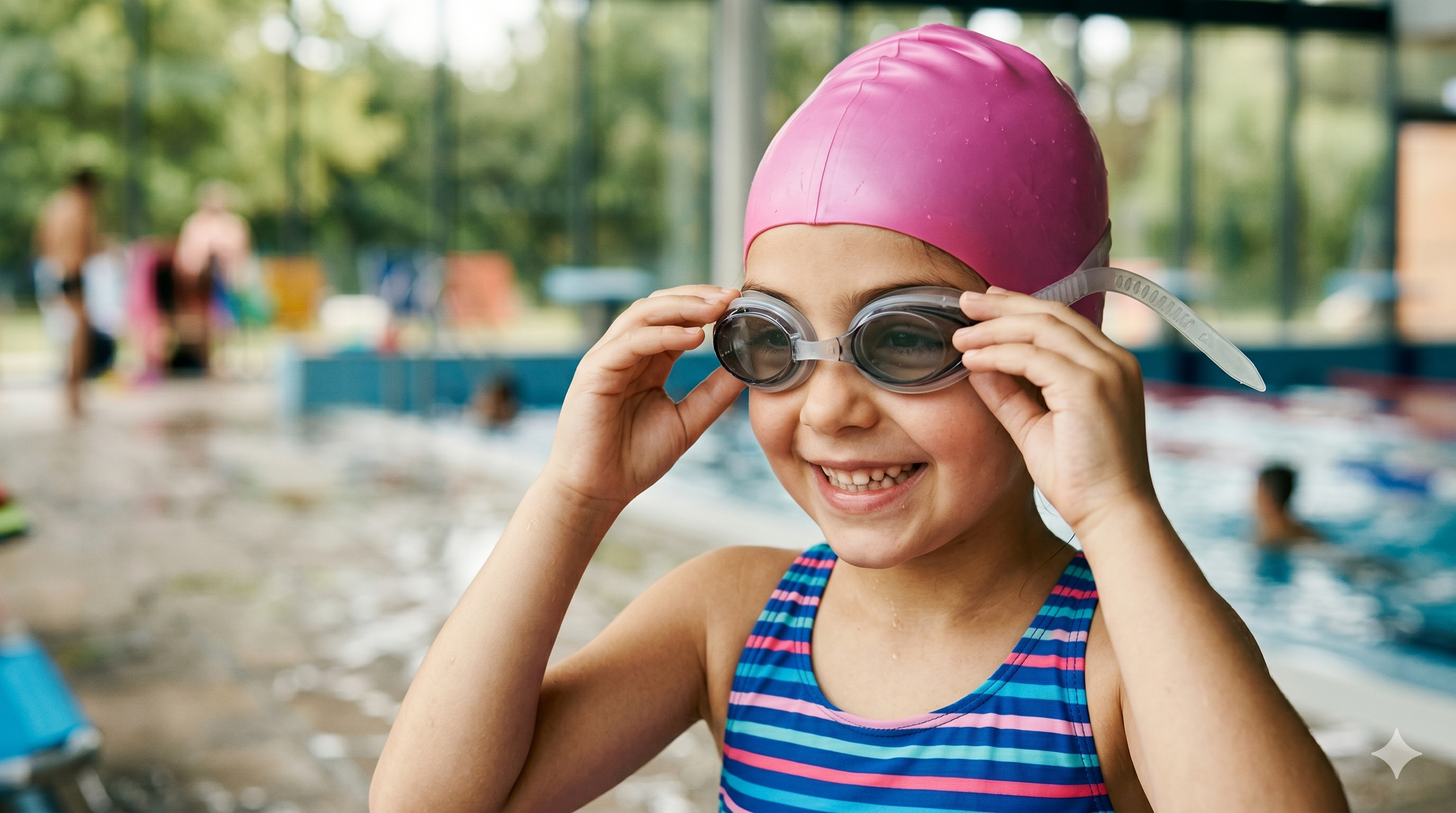
How to Put On a Swim Cap for Kids — Step by Step Guide
Getting a swim cap onto a wriggling child before a swimming lesson is one of those parenting challenges nobody warns you about. Pull too hard and it snaps. Go too slow and it tangles. Here is the simple method that works every time — for all hair types.
What Does a Swim Cap Actually Do?
Before we get into the how, it helps to understand the why. A silicone swim cap reduces the amount of water and chlorine that reaches your child's hair — but it does not keep hair completely dry. Think of it as a barrier that significantly reduces chlorine exposure and keeps hair contained and manageable during swimming.
The main benefits for children are:
- Keeps hair out of eyes during lessons.
- Reduces chlorine damage to hair over time.
- Helps teachers identify children quickly in the pool.
- Makes your child feel like a proper swimmer.
Before You Start — Do NOT Wet the Hair
A common tip you will read online is to wet the hair before putting a swim cap on. This makes the cap easier to fit — but if your goal is to keep hair as dry as possible and reduce chlorine exposure, start with completely dry hair. Wetting the hair first defeats the purpose for most families.
The only exception is for children with very thick or curly hair where the cap simply will not go on dry — in that case a very light damp is acceptable, but avoid soaking the hair.
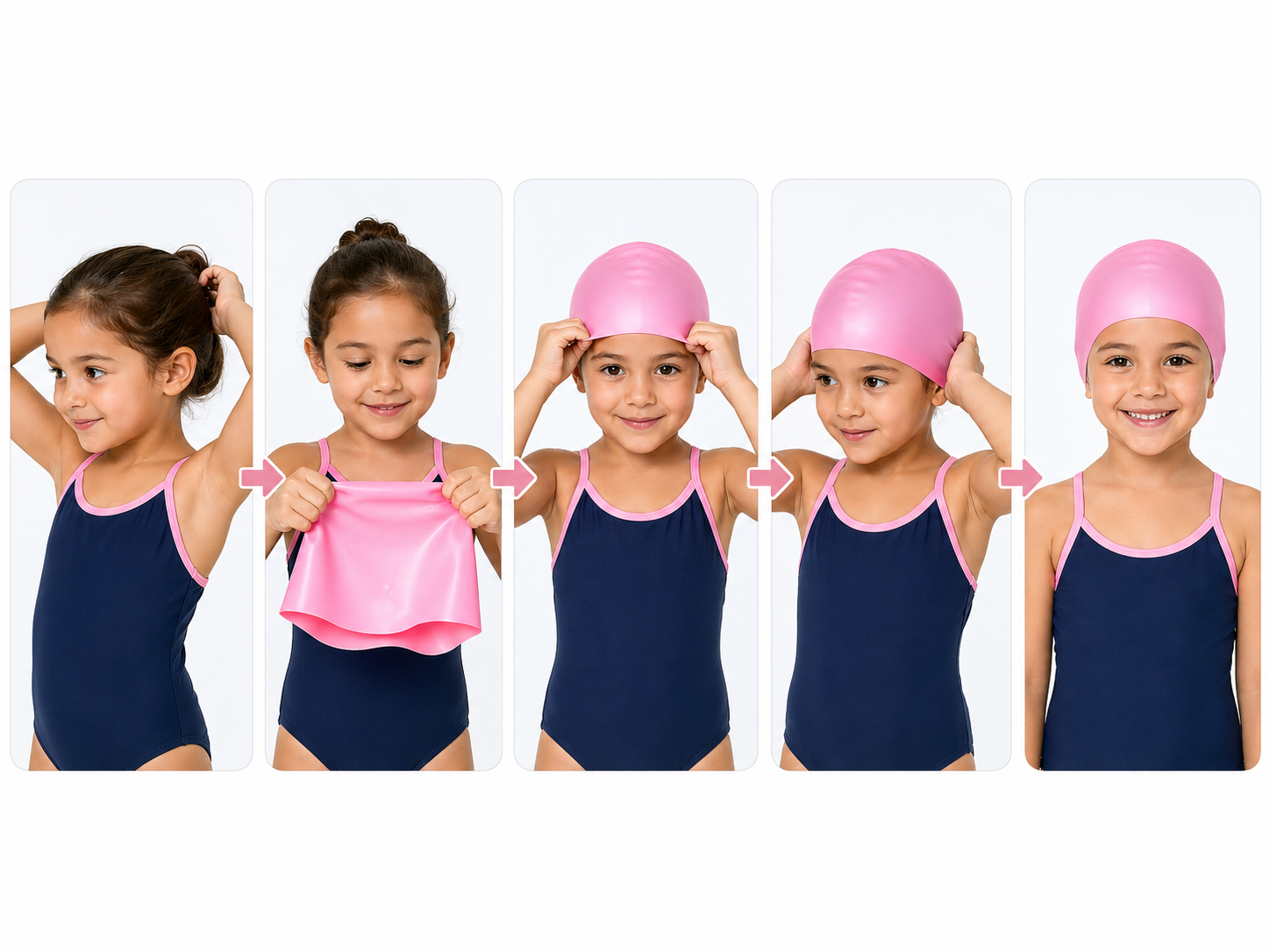
Step 1 — Gather the Hair
For children with short hair, simply smooth the hair flat against the head.
For medium or long hair, gather the hair into a loose, low bun at the back of the head. Keep it loose — a tight bun creates too much bulk. You are just getting the hair roughly together before the cap goes on.
For very long or thick hair, a low ponytail first then folded into a loose bun works better than trying to gather everything at once.
Step 2 — Stretch the Cap Open Wide
Hold the cap with both hands at the front opening — thumbs inside, fingers outside. Stretch it open as wide as comfortable. JIMJOOS silicone caps are made from soft flexible silicone that stretches significantly without losing its shape.
The wider you open the cap now, the easier the next steps are.
Step 3 — Place Over the Forehead First
Position the front edge of the cap at your child's hairline — just above the eyebrows. Press it gently onto the forehead to anchor it. This stops the cap sliding backwards as you pull it on.
Make sure the cap is centred — equal amounts on each side.
Step 4 — Pull Back Over the Head
With the front anchored, use both hands to pull the back of the cap down and over the back of the head in one smooth motion.
Think of rolling the cap backwards over the head rather than pulling it down from above.
If your child has a bun, guide it gently into the back of the cap as you pull — the cap sits over the bun, not squashing it flat.
Step 5 — Tuck in All Stray Hair
Once the cap is on, tuck any stray hairs inside the edges using a fingertip. Check:
- The hairline at the forehead.
- Around both ears.
- The nape of the neck at the back.
Hair caught under the cap edge is the most common reason water gets in. Thirty seconds checking all edges makes a real difference.
The Finished Result
The cap should sit snugly all the way around with no gaps, no hair poking out, and feel comfortable — not tight. Your child should be able to move their head freely.
If the cap feels uncomfortably tight it is likely the wrong size. JIMJOOS swim caps come in two sizes — ages 3-8 and ages 9-14 — to ensure a proper fit at every age.
Taking the Cap Off
Always remove the cap from the back first. Slide a finger under the back edge and peel it forward gently. Never pull from the front as this catches and pulls hair. Peeling from the back lets the cap roll off smoothly without discomfort.
Tips for Different Hair Types
Short hair — follow the steps above with no gathering needed.
Long straight hair — gather into a loose low bun before starting. The size 9-14 cap has more room for longer hair.
Thick or curly hair — size up if in doubt. The 9-14 cap accommodates more volume even for younger children with thick hair. Work the cap on slowly rather than forcing it.
Fine hair — make sure the cap is pulled firmly over the hairline at the front before pulling back to prevent slipping.
A Note on Hair Dryness
No silicone swim cap keeps hair 100% dry — some water will always get in, especially during vigorous swimming. The cap significantly reduces how much chlorinated water reaches the hair, which is the main benefit for most children attending weekly lessons.
After swimming, rinse your child's hair in fresh water immediately to remove any chlorine that did get through.
Choosing the Right Cap
JIMJOOS silicone swim caps are available in two sizes and 12 solid colour variations on Amazon. Letting your child pick their favourite colour means they are excited to wear it — which makes the whole fitting process much easier. Browse the full range with Prime delivery on Amazon.co.uk.
Get the gear mentioned in this article
All JIMJOOS products are available on Amazon with Prime delivery.
Shop on Amazon