Swim England Learn to Swim Stages Explained for Parents
If your child attends swimming lessons in the UK, you have probably heard the teacher mention stages or levels. Most UK swimming lessons follow the Swim England Learn to Swim framework — but what does it all actually mean? Here is a clear, plain English guide for parents.
What is the Swim England Learn to Swim Framework?
Swim England is the national governing body for swimming in England. Their Learn to Swim framework is a structured pathway that takes children from complete beginners through to confident, independent swimmers. It is split into seven stages, each building on the last.
Most swimming schools across the UK follow this framework, though some use their own badge systems alongside it. The stages are not strictly age-dependent — a child progresses when they have mastered the skills for their current stage, regardless of age.
Stage 1 — Water Confidence
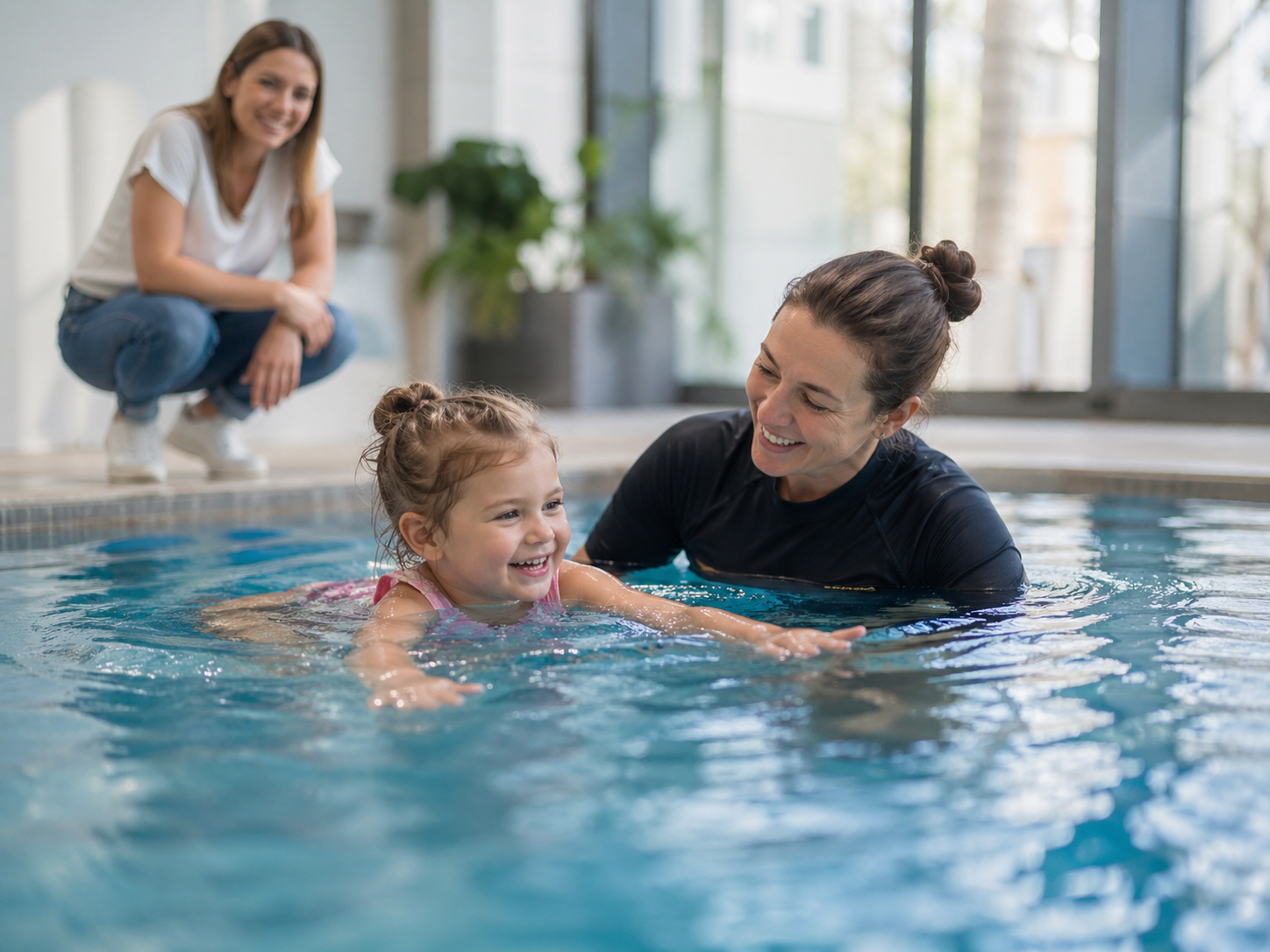
This is where every swimming journey begins. At Stage 1, children are getting comfortable in the water. Key skills include entering the water safely, submerging the face, floating with support, and moving through the water with a float or noodle.
Most children start Stage 1 between ages 3 and 5, though older children starting lessons for the first time begin here too.
Stage 2 — Building Water Skills
Stage 2 builds on confidence. Children learn to push and glide from the poolside, begin to kick their legs in a recognisable pattern, and start to coordinate arm and leg movements. They also learn to float on their back with minimal support.
Stage 3 — Developing Technique
At Stage 3 children are starting to swim independently for short distances. They develop a recognisable front crawl and begin learning backstroke. Jumping into the pool and recovering to the side is introduced at this stage.
Stage 4 — Building Stamina
Stage 4 is where swimming starts to look like proper swimming. Children swim front crawl and backstroke with improving technique, begin learning breaststroke leg kick, and swim longer distances — typically 10 metres or more.
Stage 5 — All Four Strokes
By Stage 5, children are working on all four competitive strokes — front crawl, backstroke, breaststroke and butterfly. Distances increase significantly and children are expected to demonstrate good technique, not just completion.
Stage 6 — Stroke Refinement
Stage 6 focuses on improving the quality and efficiency of all four strokes. Tumble turns, diving starts and treading water for extended periods are introduced. Children at this stage are typically strong, confident swimmers.
Stage 7 — Performance Swimming
The final stage prepares swimmers for competitive or club swimming. Starts, turns, endurance and technique are all refined to a high standard. Children completing Stage 7 are ready to join a swimming club if they wish.
How Long Does Each Stage Take?
This varies enormously between children. Some move through early stages quickly, others take longer. There is no ideal timeline — what matters is that each child masters the skills for their stage before moving on.
On average, children attending once-weekly lessons might spend 6-12 months at each of the earlier stages.
The Right Kit for Every Stage
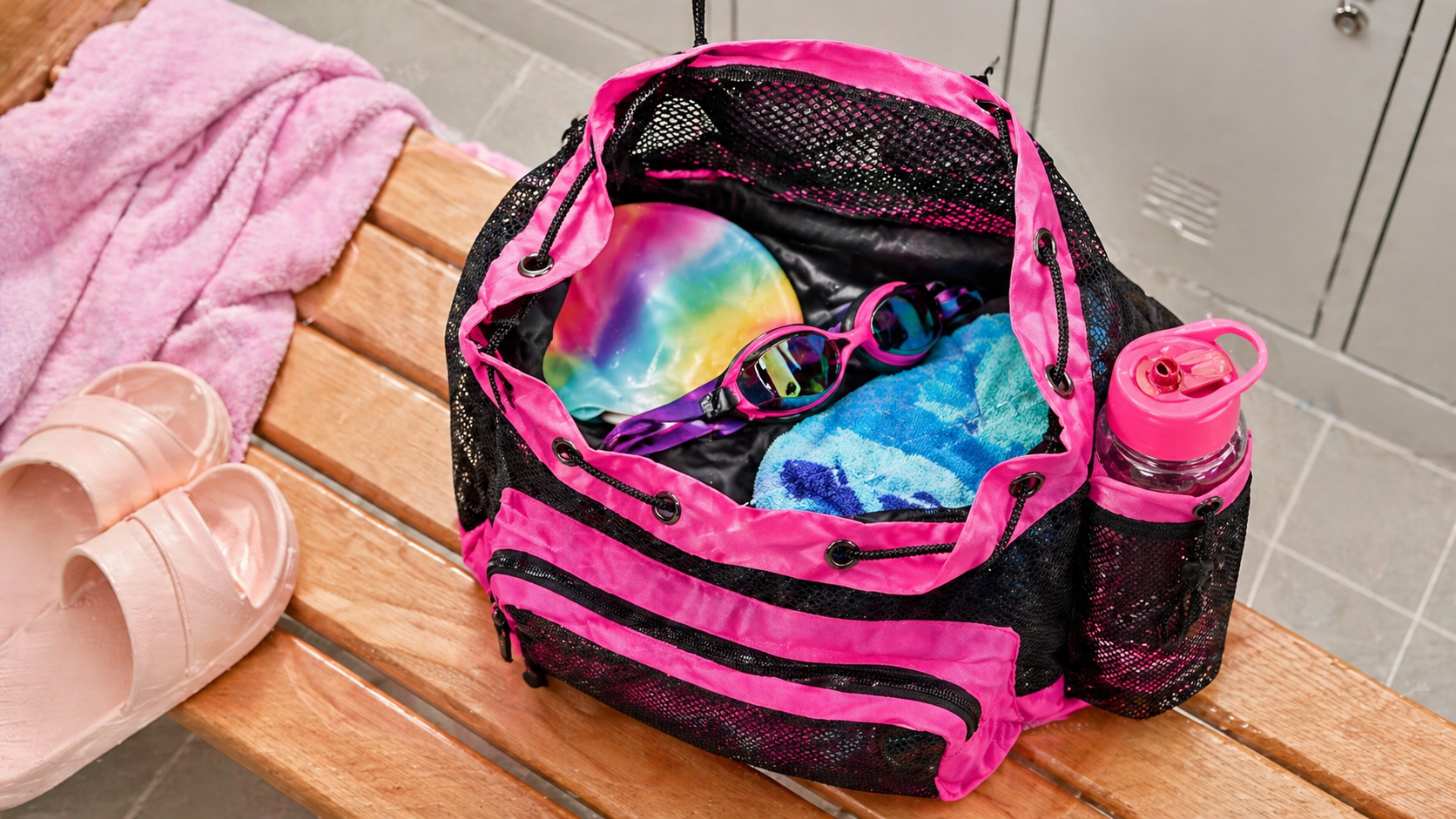
Whatever stage your child is at, the right kit helps. A well-fitting silicone swim cap, anti-fog goggles and a comfortable swimsuit all help children feel confident and ready to learn. Browse the JIMJOOS range on Amazon — designed for children aged 3-14 at every stage of their swimming journey.
Get the gear mentioned in this article
All JIMJOOS products are available on Amazon with Prime delivery.
Shop on Amazon