What to Wear for School Swimming Lessons in the UK: Parent's Guide

School swimming is an exciting milestone, but the letter asking parents to send in swimming kit can leave you wondering exactly what your child is supposed to wear.
Swimming costume or shorts? Do they need a cap? Are goggles allowed? What happens to all the wet kit afterwards?
The most important thing to remember is that individual schools and swimming pools can have different rules, so always check the kit list provided by your child's school first.
Once you know their specific requirements, this guide will help you prepare the rest.
Start With Your School's Swimming Kit List
Before buying anything new, read the information sent home by the school.
Schools may specify the type of swimwear children should wear, whether swimming caps are required and whether goggles should be brought to lessons.
Do not assume that the rules at your local leisure centre will be identical to the rules for school swimming.
If anything is unclear, asking the school before the first lesson can save a lot of last-minute stress.
What Should Girls Wear for School Swimming?
A comfortable one-piece swimming costume is a practical option for school swimming lessons.
The most important thing is that it fits properly and allows your child to move comfortably in the water.
A swimsuit that is too loose may move around during swimming, while one that is excessively tight can be uncomfortable.
Check the straps, leg openings and overall fit before the first school lesson rather than discovering a problem in the changing room.
JIMJOOS girls' swimming costumes are available in sizes from 3–4 through to 13–14.
If your child's school has specific rules about swimwear style or colour, always follow those requirements first.
What Should Boys Wear for School Swimming?
Boys will usually need suitable swimming shorts or trunks, depending on the rules set by the school or swimming pool.
Again, check the school's instructions before buying specifically for lessons.
The shorts should fit securely around the waist and allow your child to swim comfortably without constantly needing adjustment.
JIMJOOS boys' swimming shorts are available in sizes 3–4 through to 13–14.
Before sending them to school, make sure your child knows how to tighten or adjust the waistband themselves if needed.
That small bit of independence can make changing for school swimming much easier.
Does My Child Need a Swimming Cap?
This depends on the school and pool.
Some swimming programmes may ask children to wear a swimming cap, while others may leave the choice to parents.
Even when it is optional, a swimming cap can be useful for keeping longer hair contained and away from the face during lessons.
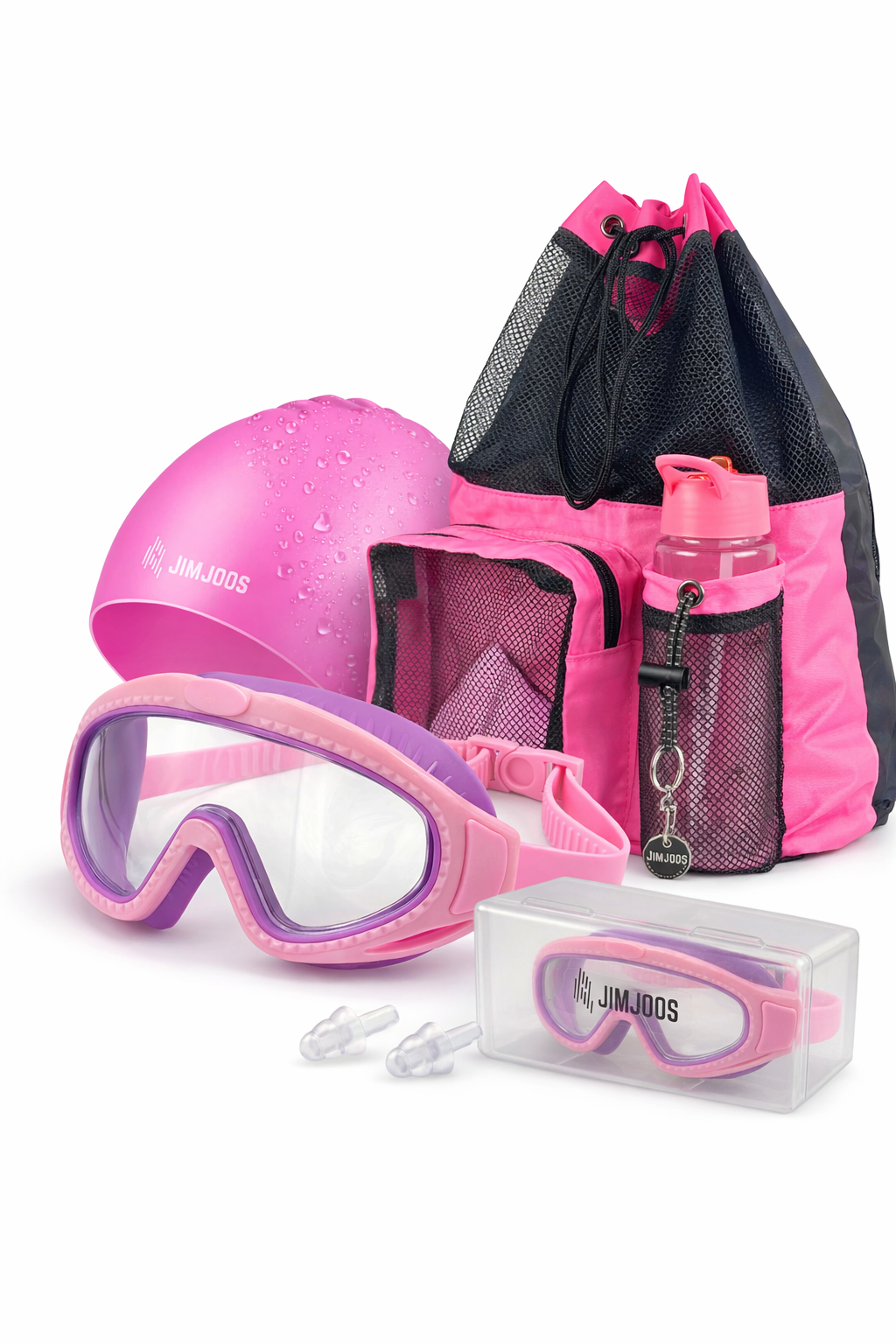
JIMJOOS silicone swimming caps come in two children's sizes:
Ages 3–8
Designed for younger children and generally smaller heads.
Ages 9–14
Designed for older children and children who need additional room.
Choose the size that feels secure and comfortable rather than forcing a cap that feels excessively tight.
A swimming cap should not be expected to keep hair completely dry. Some water can still enter around the edges during normal swimming.
Should Children Wear Goggles for School Swimming?
Goggles can make many children more comfortable putting their face into the water, but whether your child should bring them to a school swimming lesson depends on the school's instructions.
Check the kit list rather than assuming goggles are required.
If goggles are being used, make sure they are adjusted before the lesson.
Trying to fit a new pair of goggles quickly in a busy school changing room is far more difficult than adjusting them at home.
JIMJOOS traditional goggles are designed for children aged 3–10.
The JIMJOOS wide-lens style is designed for ages 6–14.
Children aged 6–10 fall within both ranges, so the best choice can depend on fit, comfort and personal preference.
Check the Goggles Before School
If your child is taking goggles, spend a few minutes checking them at home.
Make sure:
- The nose bridge is adjusted comfortably.
- The strap holds the goggles securely without being painfully tight.
- The silicone seal sits evenly around the eyes.
- No hair becomes trapped underneath the seal.
- Your child knows how to put the goggles on themselves.
Younger children may need help at first, but practising before school can make them more confident when they are getting ready with their classmates.
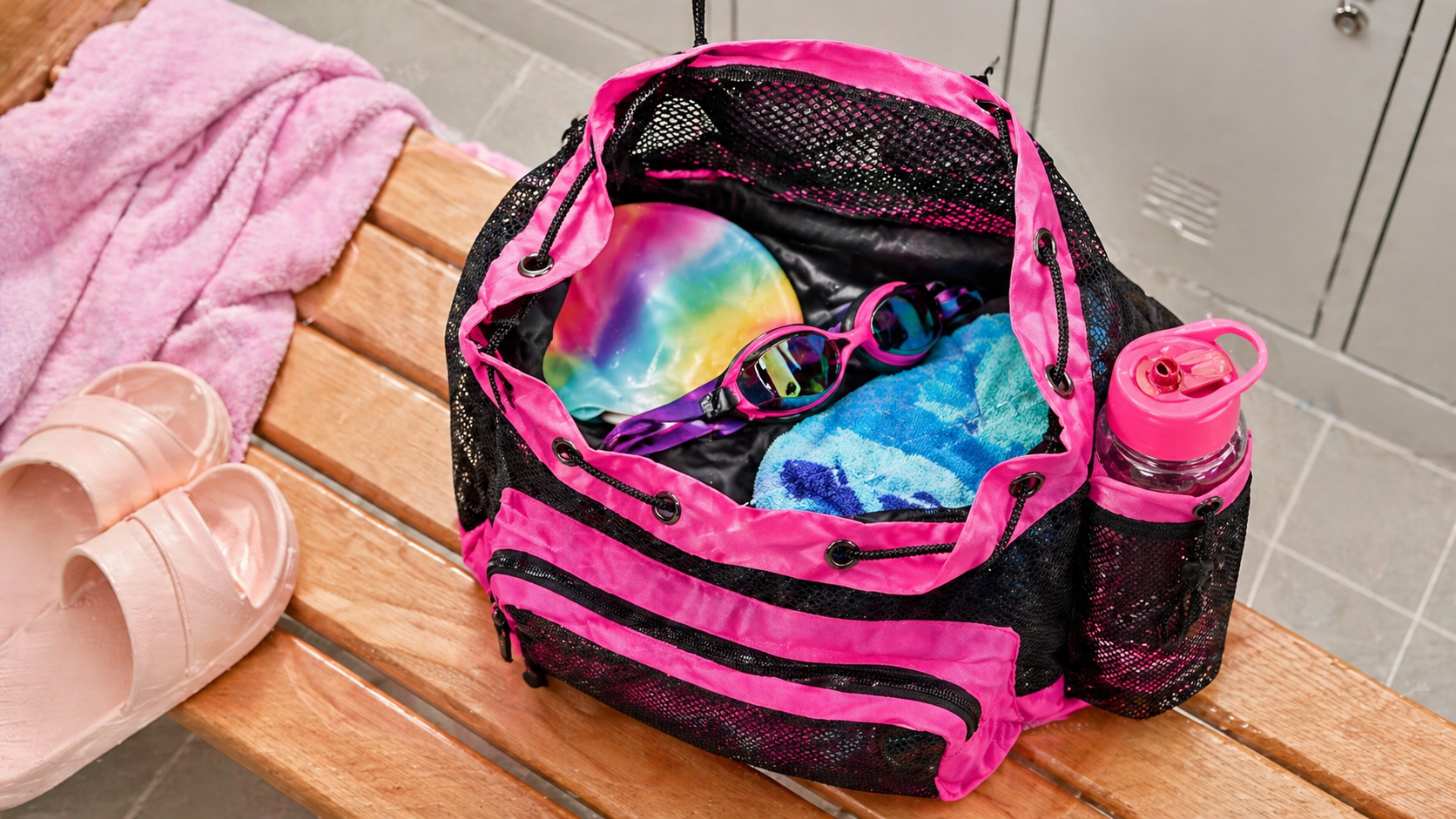
What Else Should Go in the Swimming Bag?
Your school's list should always come first, but common items may include:
- Swimming costume or swimming shorts.
- Swimming cap if required or preferred.
- Swimming goggles if permitted.
- Towel.
- Suitable poolside footwear if requested.
- Any toiletries requested by the school.
- A bag or section for wet swimming kit after the lesson.
Avoid packing lots of unnecessary items.
School swimming changing rooms can be busy, and children need to be able to recognise and manage their own belongings.
Choose a Bag Your Child Can Manage
A school swimming bag needs to be practical enough for your child to carry and organise themselves.
The JIMJOOS swim bag has a 25 litre capacity and includes different storage areas that can make organising swimming kit easier.
The front mesh pocket can be used for items such as goggles and swimming caps so they are easy to find.
There is also a side pocket for smaller belongings and an internal wet/dry section that helps keep damp swimming kit separate from other items after the lesson.
The bag has shoulder straps as well as a carry handle, giving children different ways to carry it.
Whatever bag you use, make sure your child can open, close and carry it without needing an adult every time.
The Wet Kit Problem
The journey home from school is often where swimming kit becomes messy.
A wet swimming costume or pair of shorts thrown straight into a bag can leave everything else damp.
If your swimming bag has a separate wet/dry section, show your child where their wet swimwear should go after the lesson.
This is especially useful for school swimming because parents are not usually standing in the changing room helping children pack everything away.
The simpler the system, the more likely your child is to use it.
Label Their Swimming Kit
School swimming means many children getting changed at the same time, often with very similar-looking belongings.
Label items wherever practical.
This can include:
- Swimming bag.
- Towel.
- Swimming costume or shorts.
- Swimming cap.
- Goggle case.
- Other removable belongings.
Use whatever labelling method works best for your family and the particular item.
The goal is simply to make it easier for lost kit to find its way back to your child.
Let Your Child Practise Getting Ready
One of the best ways to prepare for school swimming has nothing to do with swimming itself.
Ask your child to practise getting changed and packing their bag at home.
Can they put their swimming costume or shorts on without help?
Can they put their cap on?
Do they know which way their goggles go?
Can they open their bag and find the right compartment?
Can they dry themselves and put their clothes back on?
School swimming lessons often have limited changing time, so these simple practical skills can make the whole experience much easier.
Pack Clothes That Are Easy to Put Back On
After swimming, children may be damp, tired and trying to get changed quickly alongside the rest of their class.
If possible, avoid unnecessarily complicated clothing on swimming days.
Simple clothes that your child can manage independently can make changing quicker and less stressful.
This is particularly useful for younger primary-school children who may already be concentrating hard on remembering all their swimming belongings.
Pack the Night Before
Swimming mornings can become chaotic very quickly.
Packing the bag the night before means you have time to check everything properly.
A simple routine is:
- Check the school kit list.
- Pack the swimming costume or shorts.
- Add the swimming cap if needed.
- Check and pack the goggles if they are being used.
- Pack the towel.
- Check any additional items requested by the school.
- Make sure everything is labelled.
- Leave the packed bag somewhere obvious for the morning.
This takes only a few minutes but avoids discovering at the school gate that the goggles are still drying in the bathroom.
What If My Child Is Nervous About School Swimming?
School swimming can feel different from normal swimming lessons.
Your child may be travelling to a different pool, swimming with classmates or being taught by somebody unfamiliar.
Talk them through what is likely to happen and remind them that they do not need to be the strongest swimmer in the class.
Making sure their kit is familiar can also help.
Let them try on their swimsuit, cap and goggles beforehand so there are fewer surprises on the day.
For nervous swimmers, familiarity can make the first school swimming session feel much more manageable.
Avoid Sending Brand-New Kit Without Trying It
New swimming kit should ideally be tried at home before it goes into the school bag.
Check that:
- The swimsuit or shorts fit comfortably.
- Your child can manage the clothing themselves.
- The swimming cap is the right size.
- The goggles are already adjusted.
- The bag is easy for your child to open and close.
A swimming lesson is not the ideal place to discover that a cap is too small or the goggle strap needs completely readjusting.
After the Swimming Lesson
When the swimming bag comes home, do not leave wet kit sitting inside it until the next lesson.
Take everything out.
Rinse reusable swimming items with fresh water where appropriate and allow them to dry properly.
Allow the swimming bag to dry as well if anything inside has become damp.
Once everything is dry, repacking the essentials straight away can make the next school swimming day much easier.
A Simple School Swimming Checklist
Before your child leaves for school, check:
- School-approved swimming costume or swimming shorts.
- Swimming cap if required or preferred.
- Goggles if permitted.
- Towel.
- Any additional items specifically requested by the school.
- Swimming bag.
- A suitable place for wet kit.
- Names or labels on important belongings.
Most importantly, check the school's own instructions because those should always take priority over a general checklist.
Make School Swimming Easier, Not Complicated
Children do not need an enormous amount of equipment to enjoy school swimming.
They need comfortable swimwear, any items specifically requested by the school and a simple way to keep everything organised.
Preparing the kit beforehand also gives children one less thing to worry about.
When their swimsuit fits, their goggles are already adjusted, their cap feels comfortable and they know exactly where everything belongs in their bag, they can spend less time worrying about their equipment and more time concentrating on the lesson.
Get the gear mentioned in this article
All JIMJOOS products are available on Amazon with Prime delivery.
Shop on Amazon