When Should My Child Start Swimming Lessons in the UK?
Swimming is one of the most important life skills your child will ever learn. But knowing when to start lessons — and what kind — can feel confusing. Here is a straightforward guide for UK parents.
The Short Answer
Children can start parent-and-child water confidence classes from as young as six weeks old. Formal swimming lessons — where children begin learning technique independently — are typically recommended from age three.
Baby and Toddler Classes (6 Weeks to 3 Years)
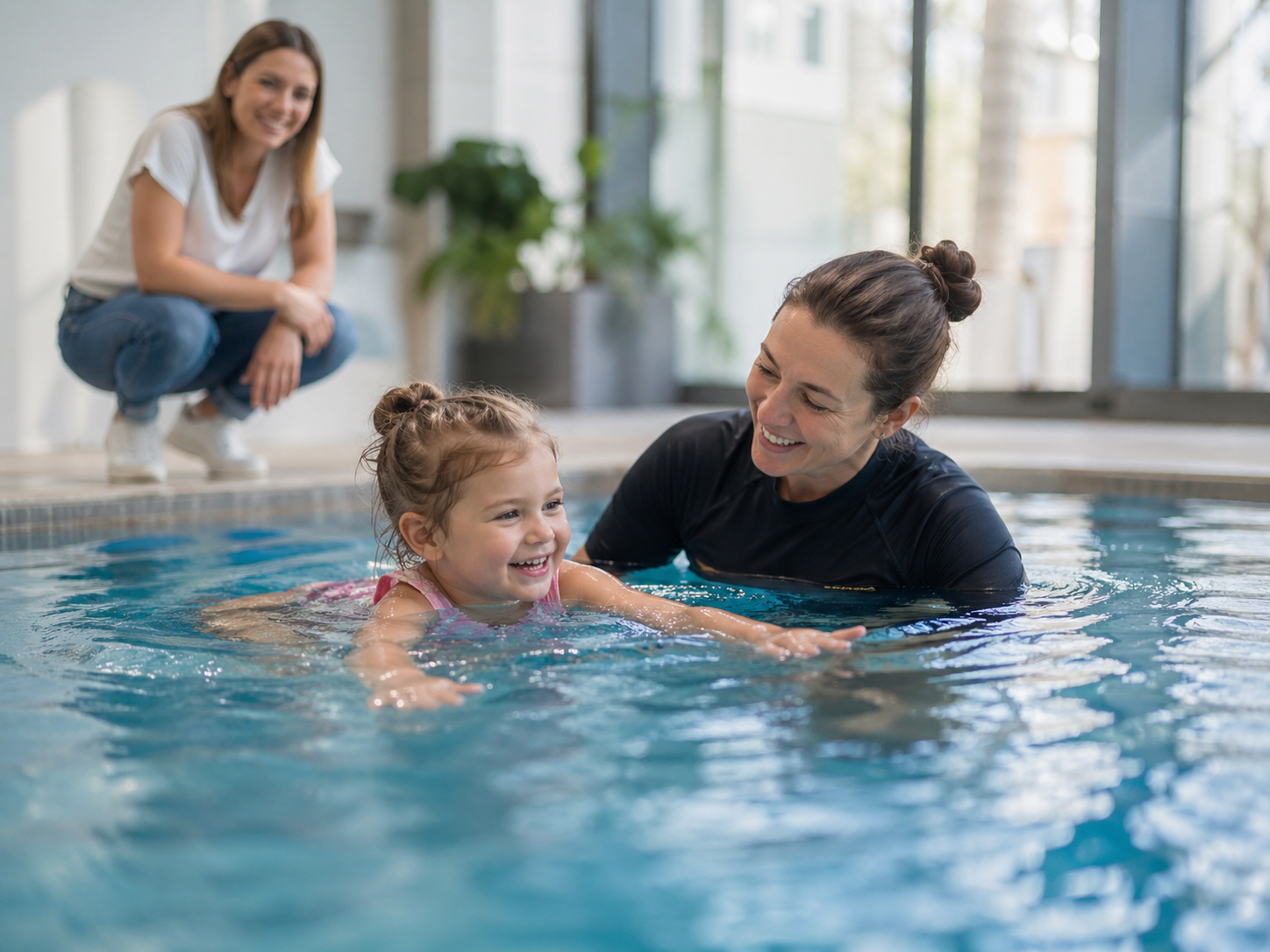
These early sessions are not about learning to swim. They are about water confidence — getting babies and toddlers comfortable with the feeling, sounds and temperature of a pool. Parents get in the water with their children, making it a bonding experience as much as a developmental one.
The benefits of starting this young are significant. Children who spend time in water from infancy show measurably higher water confidence when formal lessons begin. They are less likely to be fearful and more likely to progress quickly.
In the UK, most leisure centres and private swim schools offer baby swimming from around six weeks. Swim England's Starfish and Duckling programmes are widely available and a good place to start.
Formal Lessons from Age 3
From around age three, children have the coordination, attention span and physical development to begin following instructions from a teacher without a parent in the water. This is when structured lessons typically begin.
Most UK swimming lesson programmes follow the Swim England Learn to Swim framework, which takes children through stages from complete beginner to confident independent swimmer. The stages are numbered 1-7, with most children reaching Stage 1 around ages 3-5.
What If My Child is Older?
It is never too late to learn. Children who start lessons at age 5, 7, or even older can absolutely become confident swimmers — it may just take a little longer to overcome any water anxiety that has built up. The key is finding a patient, encouraging teacher and keeping early sessions positive.
How to Choose a Swim School in the UK
Look for schools whose teachers hold an STA (Swimming Teachers Association) or Swim England teaching qualification. Class sizes matter too — smaller classes mean more individual attention. For beginners, no more than 4-6 children per teacher is ideal.
How Often Should They Go?
For young children, once a week is the standard and it works well. Consistency matters more than frequency at this stage — a child who swims every week for a year will progress far more than one who does an intensive course and then stops for months.
The Right Kit for Lessons
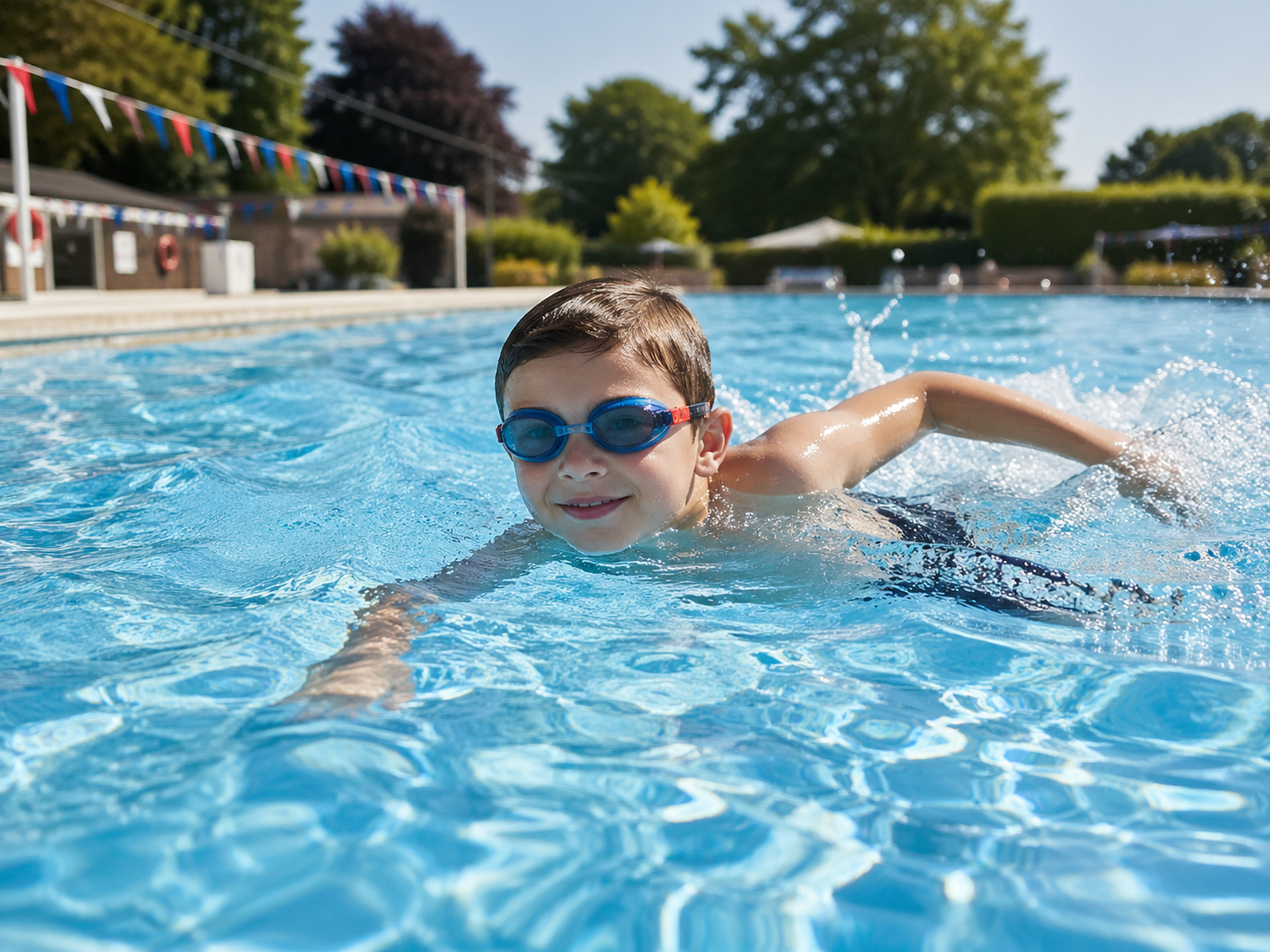
A well-fitting silicone swim cap keeps hair out of eyes and helps children feel ready. Anti-fog goggles make a huge difference to confidence — children who can see underwater progress significantly faster. Browse the full JIMJOOS range on Amazon for everything your child needs for their first lesson.
Get the gear mentioned in this article
All JIMJOOS products are available on Amazon with Prime delivery.
Shop on Amazon